Bird Transportation Cage
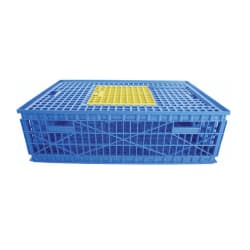
Poultry cages For Live Birds Transportation Has Special Rigid design. Top Wide Sliding Door Helps in easy Loading/Unloading Of Birds
Door Size :Capacity : Cage Weight :Stuffing :Colour :
33*36cm or 13*14 Inch.12 to 15 Broiler Of 2 kg wt.16 to 18 Broiler Of 1.5 kg wt6.500Kg1*20 Container 600pc & 1*40 hc 1400 Duly CKD ConditionRed, Yellow, Orange, Blue, Grey
Chicken transportation cages are essential tools in poultry farming, designed to ensure the safe and efficient transport of adult chickens within and between farms. These cages are used for various purposes including moving birds to different growing areas, bringing them to market, or relocating them to processing facilities. Understanding their design, use, and benefits is crucial for maintaining the health and welfare of chickens during transportation.
Door Size :Capacity : Cage Weight :Stuffing :Colour :
33*36cm or 13*14 Inch.12 to 15 Broiler Of 2 kg wt.16 to 18 Broiler Of 1.5 kg wt6.500Kg1*20 Container 600pc & 1*40 hc 1400 Duly CKD ConditionRed, Yellow, Orange, Blue, Grey
Chicken transportation cages are essential tools in poultry farming, designed to ensure the safe and efficient transport of adult chickens within and between farms. These cages are used for various purposes including moving birds to different growing areas, bringing them to market, or relocating them to processing facilities. Understanding their design, use, and benefits is crucial for maintaining the health and welfare of chickens during transportation.
Key Features
- No Legs & Back Injuries
- Excellent Ventilation
- Hygienic – easy To Clean By Water or Steam
- Minimum Bird weight Shrinkage In Transportation
- Firmly Stackable
- High Stability And secure Stacking & Locking
- Simple Push Fit Self Locking assembly
- Perforated Floor
- Customize Color & Naming Facility Available on Container Load Order
Benefits
- 1. Material and Durability: Chicken transportation cages are often made from strong, lightweight materials such as plastic or metal. These materials need to be durable to withstand frequent use and cleaning, yet light enough for easy handling.
- 2. Design for Ventilation: Good ventilation is a critical feature. The cages are designed with ample open space or mesh to ensure adequate airflow, which is vital for preventing overheating and ensuring the chickens have enough oxygen.
- 3. Size and Capacity: The cages are sized to accommodate adult chickens comfortably without overcrowding, yet securely enough to prevent excessive movement that could cause injuries.
- 4. Ease of Loading and Unloading: Designs typically include features that make loading and unloading chickens as stress-free as possible, both for the birds and for the handlers.
- 5. Stackability and Transport Efficiency: To maximize space in transport vehicles and ensure stability during transit, these cages are often stackable. This design consideration helps in optimizing logistics and reducing transportation costs.
- 1. Protection and Security: Cages protect chickens from environmental elements and reduce the risk of escape during transport.
- 2. Reduction in Stress and Injury: Properly designed cages reduce stress by providing adequate space, ventilation, and protection. This is important as stress can lead to immunosuppression, making chickens more susceptible to diseases.
- 3. Biosecurity: By using dedicated transport cages that can be cleaned and disinfected between uses, farms can better maintain biosecurity standards, helping prevent the spread of diseases between groups of birds or farms.
- 4. Efficiency in Handling: With cages designed for easy handling, transportation processes can be streamlined, saving time and labor costs.
- 1. Regular Maintenance and Inspection: Regularly inspect cages for damage, such as broken doors or sharp edges, and perform necessary repairs to ensure the safety and comfort of the chickens.
- 2. Proper Cleaning and Disinfection: Thoroughly clean and disinfect each cage between uses to prevent the transmission of diseases. Ensure the cages are dry before loading chickens to avoid creating a humid environment that can foster bacteria growth.
- 3. Avoid Overcrowding: Follow guidelines for the maximum number of chickens per cage to avoid overcrowding, which can cause heat stress, suffocation, and injuries.
- 4. Monitor Weather Conditions: When transporting chickens, especially over longer distances, consider weather conditions. Extreme temperatures can be harmful, and additional protective measures may be necessary.
- 5. Gentle Handling: Handle the cages gently during loading and unloading to minimize stress and potential harm to the chickens.
Technical Specifications
| Length | Width |
| IN CMS – IN INCHES | IN CMS – IN INCHES |
| 91 – 36 | 56 – 22 |
| 93 – 36 | 56 – 22 |